
Safe & Long-Lasting Single Dental Implants in Cheadle, Manchester
Single dental implants are the most reliable way to replace a tooth. They offer a permanent fixed solution that looks and feels natural. Since single implants restore both function and appearance without affecting other teeth, they are considered the gold standard for replacing a single tooth. At our Cheadle dental implant clinic, we offer safe, clinically proven single dental implants that allow you to feel confident, comfortable and secure with your long-term oral health.
Key facts:
A single dental implant is a titanium post that is placed into your jaw bone to replace the root of your missing tooth. After healing, the implant bonds with your jaw bone and holds a tooth replacement made to match your natural tooth colour, shape and functionality. This type of implant is standalone and does not need adjacent teeth for support.
Key benefits:
You may be suitable for a single dental implant if you:
Generally speaking most adults are candidates for single dental implants. We confirm final candidacy during your consultation using 3D CBCT scans which show bone quality and tooth position.
Quick action can save your tooth and reduce pain. Contact us for immediate support.
Call Us Now:
0161 428 2355
Call Us Now:
0161 428 2355
Replace one missing tooth without affecting surrounding teeth.
Ideal when several teeth are missing in a row.
A secure alternative to removable dentures.
Replace an entire arch of teeth with as few as 4–6 implants
Consultation & Digital CBCT 3D Scan
Personalised Implant Treatment Plan
Implant Placement Under Local Anaesthetic
Consultation & Digital CBCT 3D Scan
Custom Crown Placement
Most patients experience minimal discomfort, similar to having a routine tooth extraction.
Yes. Single dental implants are a well-established and safe treatment option that have been used for decades. Placed by trained and experienced implant surgeons, success rates are greater than 95%. When maintained with good oral hygiene habits and regular dental visits a single dental implant can easily last 20+ years.
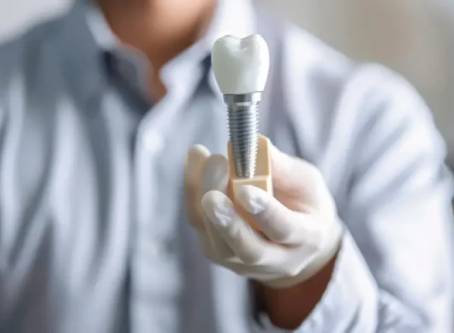
While bridges may suit some cases, implants provide a more conservative and long-term solution.
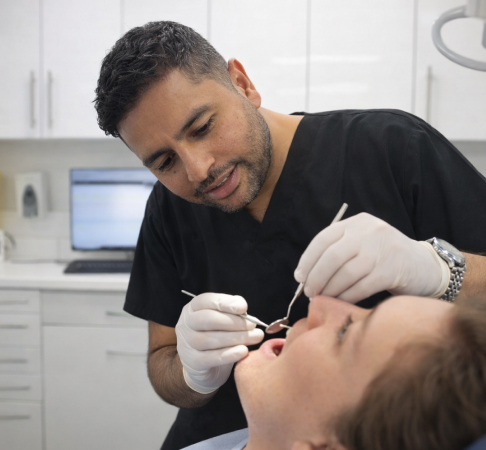
If you are thinking about getting a single dental implant from Cheadle, our experienced team are here to support you every step of the way. Call us today to schedule your consultation and get a custom-made plan along with a detailed cost breakdown.
Treatment is performed under local anaesthetic. Most patients experience little discomfort.
The titanium post can last a lifetime. The crown won’t — expect 15–25 years before it needs replacing. Longevity depends heavily on bone density, gum health, smoking status, and whether you grind your teeth. “Lifetime implant” claims are technically true for the screw; less so for the whole restoration.
Dental implant treatment usually takes between three and nine months, depending on your oral health and whether additional procedures, such as bone grafting, are needed. The process includes implant placement, healing time for the implant to fuse with the jawbone, and fitting the final crown, ensuring a stable and long-lasting result.
Yes, but it’s the hardest case. Front teeth are under aesthetic scrutiny that back teeth aren’t — gumline symmetry, papillae between teeth, colour match, and crown shape all have to be near-perfect. Outcomes depend more on your surgeon’s skill and your gum biotype than on the implant itself. Manage expectations accordingly.
No. It’s required when there’s insufficient bone volume or density to support the implant. That depends on how long the tooth has been missing, why it was lost, and your individual anatomy. Some patients need it; many don’t.
Yes — but smoking significantly increases the risk of implant failure. Nicotine restricts blood flow, which slows the healing process needed for the implant to fuse with the bone. Most dentists will proceed, but may ask you to stop smoking around surgery. Success rates are lower than for non-smokers.
Dental implants are designed to look and feel like natural teeth. The crown is custom-made to match the shape, size, and colour of your surrounding teeth — and for most patients, the result is a seamless, natural-looking smile.
It depends on your bone density, adjacent teeth health, and budget — not a blanket yes. Implants preserve bone and don’t touch neighbouring teeth, which is a genuine structural advantage. But a bridge is faster, cheaper, and works better where bone loss makes implant placement risky.